

 Melayu


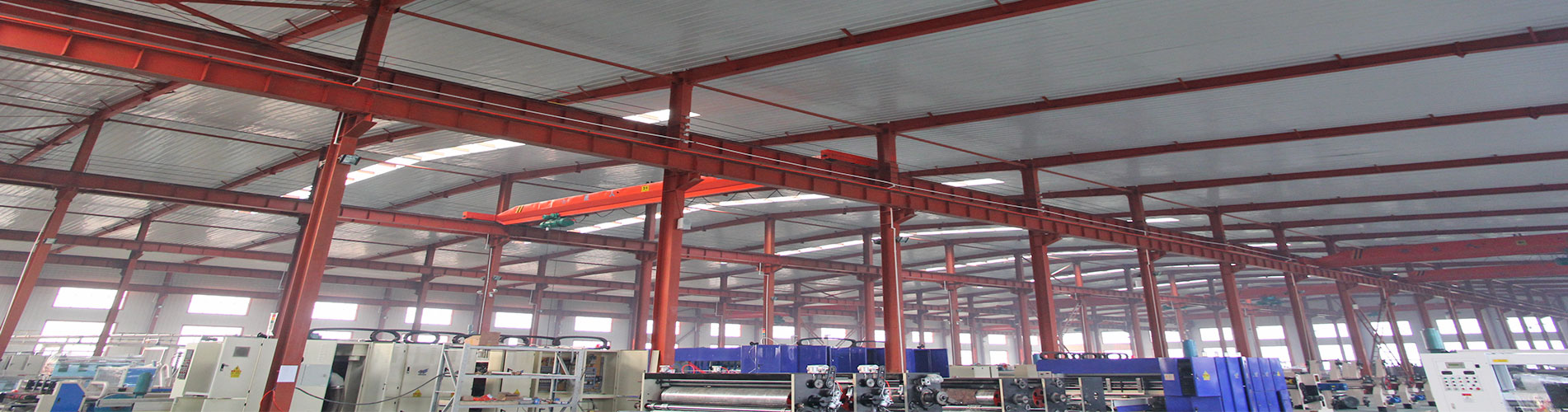

The Advantage of Glass Curtain Walls in Steel Structure Buildings
Here is a detailed look at the advantages of using glass curtain walls in steel-structure buildings, highlighting the synergy between these two modern construction systems.
The Advantage of Glass Curtain Walls in Steel-Structure Buildings
Glass curtain walls and steel structures are a quintessential pairing in modern architecture, epitomizing the principles of efficiency, transparency, and strength. This combination is not coincidental; it leverages the inherent strengths of both systems to create buildings that are functional, aesthetic, and high-performing.
Here are the key advantages:
1. Synergy of Structural Logic and Speed
Lightweight Infill: Steel frames are designed for high strength-to-weight ratios. Glass curtain walls are a very lightweight cladding system compared to traditional masonry or precast concrete. This reduces the dead load on the steel structure, allowing for more slender, elegant columns and beams, and potentially lowering foundation costs.
Parallel Construction: The steel skeleton can be erected rapidly, and the curtain wall can be fabricated off-site simultaneously. Once the steel frame is stabilized, the pre-assembled curtain wall units can be installed quickly, dramatically shortening the overall construction timeline. The two systems are independent yet complementary.
2. Design Freedom and Aesthetic Appeal
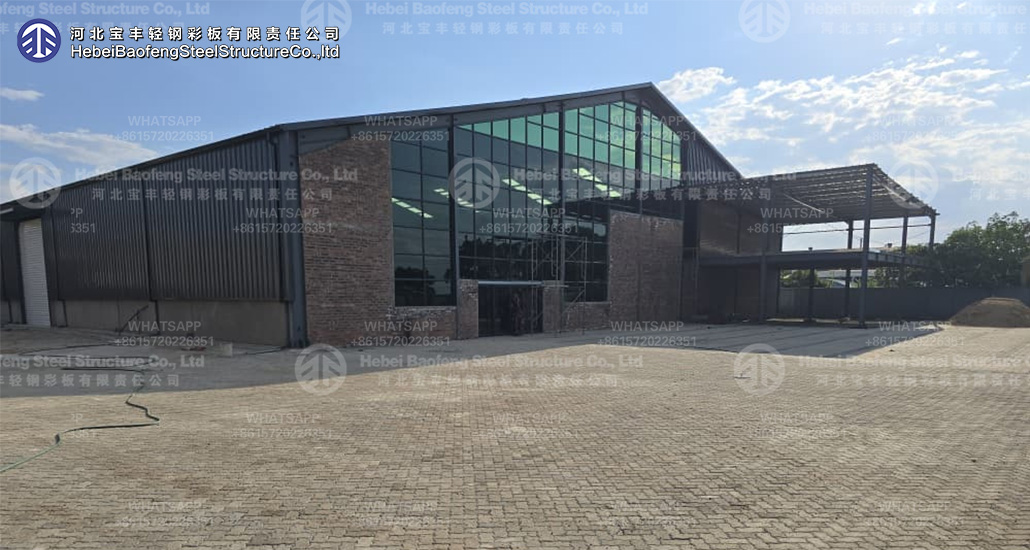
Maximized Transparency and Views: The primary steel columns and beams are typically set back from the facade. The curtain wall, with its minimal framing, can create vast, uninterrupted glazed surfaces. This floods interiors with natural light, provides panoramic views, and creates a sleek, modern aesthetic that is highly desirable for corporate headquarters, institutions, and high-end residential towers.
Architectural Expression: The contrast between the solid, expressive steel members (which can be left exposed) and the transparent, fragile-looking glass skin is a powerful architectural statement. It clearly expresses the building's structural truth and creates visual interest.
Flexibility in Form: Curtain walls can be customized to fit complex geometries—curves, angles, and unique shapes—that are more easily achieved with a flexible steel frame than with concrete, allowing for more daring architectural designs.
3. Superior Performance and Sustainability
High-Performance Glazing: Modern curtain walls use insulated glass units (IGU) with Low-E coatings, argon gas fills, and thermal breaks in frames. This significantly improves the building's thermal performance, reducing heating and cooling loads and enhancing energy efficiency.
Weathertight Seal: Professionally engineered and installed curtain walls provide an excellent barrier against air and water infiltration, protecting the building envelope and improving occupant comfort.
Daylight Harvesting: The extensive use of glass reduces reliance on artificial lighting during the day. When integrated with smart building systems, this can lead to substantial energy savings and contribute to LEED or other green building certifications.
4. Economic and Functional Benefits
Flexible and Adaptable Interiors: The column-free or long-span spaces possible with steel frames, combined with the non-load-bearing nature of the curtain wall, create highly flexible interior floor plates. This is ideal for modern offices that require reconfigurable layouts.
Future-Proofing: Both systems are relatively easy to modify. Adding new openings or replacing glazing panels in a curtain wall is simpler than altering a load-bearing masonry wall, making the building more adaptable over its lifespan.
Reduced Floor-to-Floor Height: The slimmer profile of steel beams and the integrated curtain wall system can minimize the floor-to-floor height compared to some concrete systems, allowing for more stories within a given height restriction.
5. Technical and Constructability Advantages
Accommodation of Movement: Steel structures are flexible and will deflect under load (live loads, wind, seismic activity) and expand/contract with temperature changes. Curtain walls are designed with expansion joints and sliding connections to accommodate this movement without cracking or compromising the seal, a critical compatibility factor.
Prefabrication and Quality Control: Both systems benefit from factory fabrication under controlled conditions, ensuring higher quality, precision, and consistency than many site-built alternatives.
Important Considerations (The Balance)
While the advantages are significant, a balanced design must address potential challenges:
Thermal Bridging: Steel is an excellent conductor of heat. Careful detailing with thermal breaks in the curtain wall framing and insulation at spandrel areas is crucial to prevent condensation and heat loss.
Solar Heat Gain: Extensive glazing can lead to overheating. This is managed by selecting the right glass (solar control coatings, fritting), incorporating external shading devices (often integrated into the curtain wall design), and optimizing facade orientation.
Initial Cost: High-performance unitized curtain wall systems can have a higher upfront cost than simple window walls, though life-cycle savings in energy and maintenance can offset this.
Conclusion
The combination of glass curtain walls and steel-structure buildings represents a peak in modern engineering and architectural design. The synergy is profound: the steel frame provides the strong, flexible, and fast skeleton, while the curtain wall provides a lightweight, high-performance, and luminous skin. Together, they enable the creation of iconic, efficient, and human-centric buildings that define contemporary skylines. Their advantages in speed, aesthetics, performance, and flexibility make them the go-to solution for high-rise commercial, institutional, and many residential projects around the world.
Kategori
blog terbaru


Untuk Pertanyaan mengenai produk atau pricelist kami, sila tinggalkan kepada kami dan kami akan berhubung dalam 24 jam.
© hak cipta: 2026 Hebei Baofeng Steel Structure CO.,LTD Hak cipta terpelihara.

IPv6 rangkaian disokong


 +8615720226351