

 Melayu


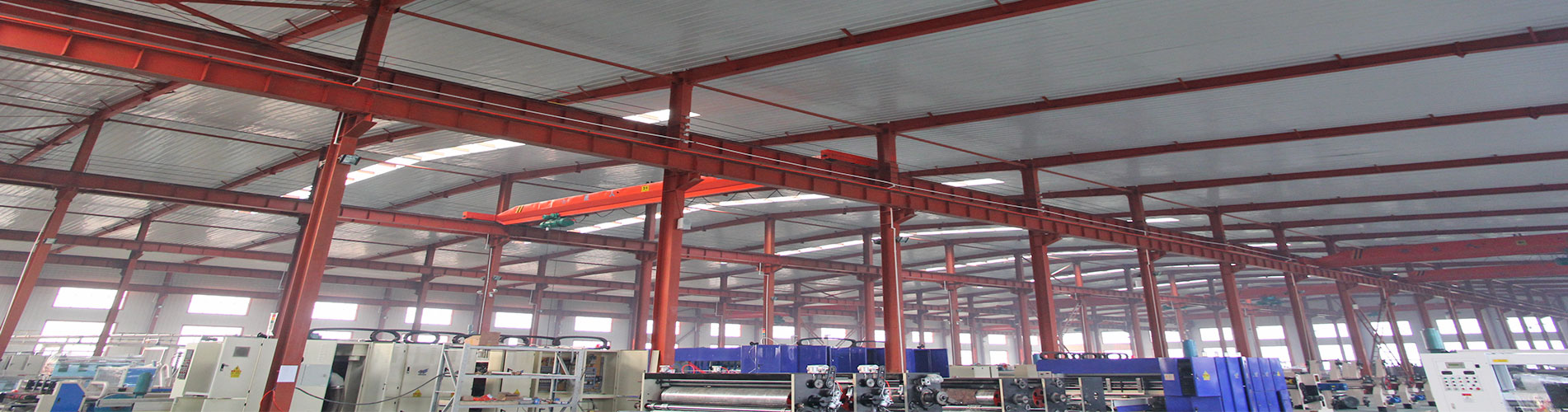

Single-Span vs Multi-Span Steel Warehouses
Single-Span vs Multi-Span Steel Warehouses: Choosing the Right Structure for Your Needs
When planning a new steel warehouse, one of the most fundamental decisions you'll face is the structural layout: should you opt for a vast, column-free space or a more compartmentalized, expansive footprint? This choice boils down to selecting between a single-span and a multi-span design. Each has distinct advantages, cost implications, and ideal use cases. Let's break down the key differences to guide your decision.
Core Definitions
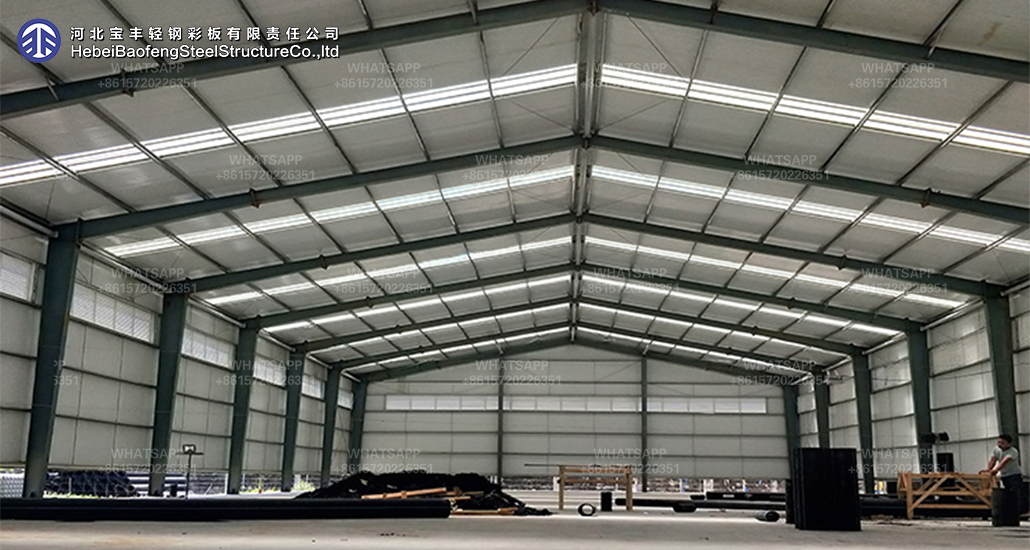
Single-Span Warehouse: The entire building is covered by one large, clear-spanning steel structure. There are no interior columns, creating one uninterrupted space.
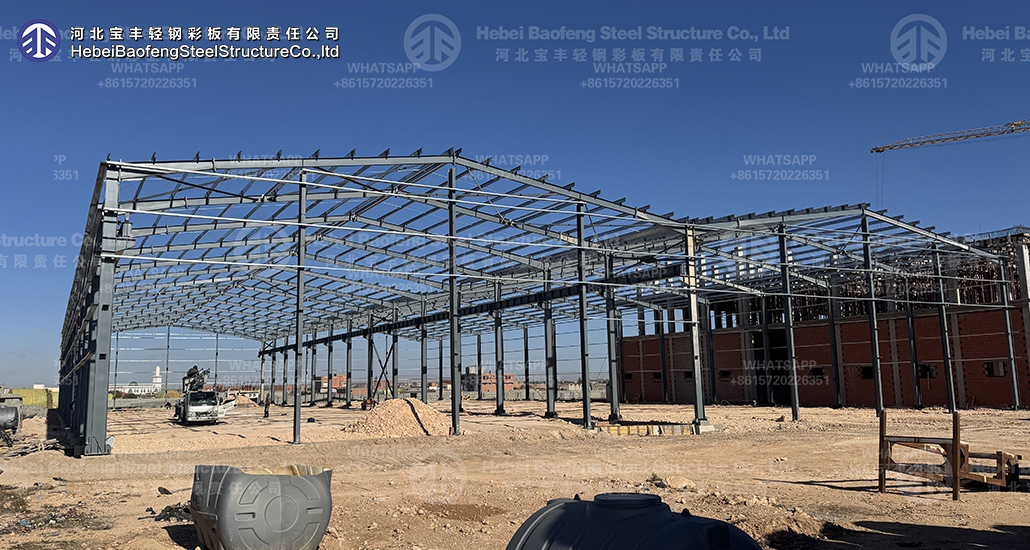
Multi-Span Warehouse: The building consists of two or more single-span structures built side-by-side, connected along their length. Rows of interior columns separate the individual bays or spans.
|
Aspect |
Single-Span Warehouse |
Multi-Span Warehouse |
|
Space & Layout |
✔️ Pros: Unobstructed, flexible floor space. Allows for maximum storage density, easy reconfiguration of racking, and highly efficient logistics (forklift movement, sorting). Near 100% usable area. ✖️ Cons: Overall building width is limited by the economical maximum span. |
✔️ Pros: Can cover extremely large land areas cost-effectively, ideal for massive storage volumes. ✖️ Cons: Interior columns reduce usable space, create obstacles for layout, and complicate material handling flow. |
|
Cost & Structure |
✔️ Pros: Simpler structural system with fewer connection details. ✖️ Cons: Large spans require deeper, heavier primary steel members (trusses, arches). This leads to higher steel tonnage and a higher cost per square meter/foot. Foundations are also more substantial. |
✔️ Pros: Smaller spans mean lighter, more economical primary beams and lower steel weight. Generally offers a lower cost per unit area. ✖️ Cons: More columns and foundations are required. Structural connections (e.g., at column tops) can be more complex. |
|
Functionality |
Best for applications demanding total clearance: Large maintenance workshops, automated storage and retrieval systems (AS/RS), distribution/sortation centers, aircraft hangars, and sports facilities. |
Best for general bulk storage: Raw material storage, manufacturing plants, and distribution centers where very large footprint is prioritized over completely free space. |
|
Expandability |
Difficult to widen. Expansion is typically limited to lengthwise extension. Adding width usually requires a new, separate structure. |
Easy to expand laterally. You can add additional bays (spans) alongside existing ones, making it a flexible choice for future growth. |
|
Construction |
Focus is on erecting and connecting large primary members. While crane requirements may be greater, the number of parts is lower, potentially speeding up erection. |
Involves erecting many smaller, repetitive components. While each lift is simpler, the total number of parts and connections (bolts, welds) is higher. |
How to Choose: Key Decision Factors
Your choice should balance Operational Efficiency against Initial Capital Cost.
Choose a Single-Span Warehouse if:
Unobstructed space is non-negotiable for your operations (e.g., high-bay racking, large equipment, automated guided vehicles).
You prioritize long-term layout flexibility and maximum storage density.
Your budget allows for a higher initial investment to achieve lower operational costs and superior efficiency.
Choose a Multi-Span Warehouse if:
Minimizing cost per square meter/foot is the primary driver.
You need to cover a very large land area for bulk storage.
The presence of interior columns is acceptable for your storage plan (e.g., pallet storage with aisles between columns).
Future lateral expansion is a likely requirement.
Modern Trends & Hybrid Solutions
The line between these two types is blurring with advanced engineering. The "economical span" for single-span buildings continues to increase with better materials and software. Furthermore, a popular hybrid approach is the multi-span warehouse with "clear-span" or "long-span" bays.
This involves removing interior columns in specific sections (using heavier transfer girders) to create large, open areas within a multi-span framework. It’s an excellent compromise, providing open space where needed (e.g., for sorting) while maintaining the cost benefits of standard multi-span construction for bulk storage areas.
Final Takeaway
There's no universally "best" option. The right decision is the one that best aligns with your functional needs and financial constraints.
Invest in a Single-Span structure for operational excellence and space freedom.
Opt for a Multi-Span structure for maximum covered area and capital efficiency.
Carefully analyze your workflow, storage methodology, and growth plans. Consulting with an experienced steel building supplier and engineer early in the process is crucial to model the lifecycle costs and benefits of each option for your specific project.
Kategori
blog terbaru


Untuk Pertanyaan mengenai produk atau pricelist kami, sila tinggalkan kepada kami dan kami akan berhubung dalam 24 jam.
© hak cipta: 2026 Hebei Baofeng Steel Structure CO.,LTD Hak cipta terpelihara.

IPv6 rangkaian disokong


 +8615720226351